Event Transportation
Event Transportation Planning in Santa Barbara County
Plan private event transportation across Santa Barbara County with advice for venues, group arrivals, loading zones, departure windows, and return trips.
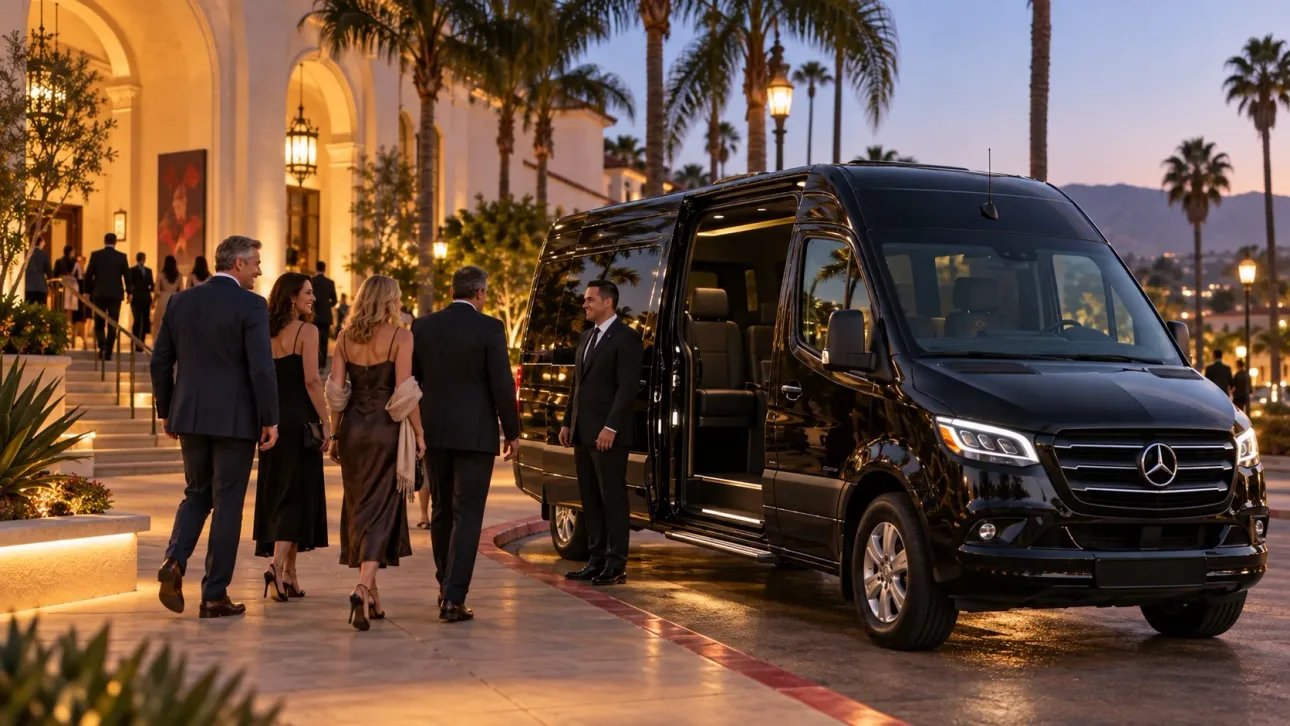
Private event transportation has two goals: bring the right people to the right entrance on time, then give them a clear way home. The first goal depends on addresses, traffic, venue access, and coordinated arrival windows. The second depends on realistic departure times, passenger counts, and final destinations. Both should be planned before invitations or guest instructions promise a service.
Santa Barbara County events can take place at downtown hotels, coastal properties, private residences, wineries, ranches, restaurants, performance venues, and business locations. Each setting has different loading and access rules. A plan that works for a small dinner may not suit a fundraiser, concert, company gathering, birthday, or family celebration.
This guide shows organizers how to build event transportation in Santa Barbara around the actual guest movements and venue requirements.
Define the event movements first
Begin with people and places, not vehicles. List every group that may need transportation, where each group begins, the time they must arrive, and where they will go afterward. This turns a broad idea—“we need transportation for the event”—into a schedule that can be evaluated.
Common movements include:
- Hosts from a residence or hotel to the venue
- Guests from one or more hotels to the event
- Speakers, performers, or honored guests on separate timing
- Staff or production personnel with an earlier arrival
- Guests returning to hotels at planned times
- Hosts traveling to a final private destination
Some movements can be combined; others cannot. If staff must arrive while a vehicle is still transporting hosts, those trips overlap. If two hotels are in opposite directions, a single pickup loop may create an unnecessarily long ride. Mapping the movements exposes these conflicts early.
Give each movement a short name, such as “Host Arrival,” “Hotel A Guests,” or “Final Return.” Use those names consistently in the quote request, event plan, and guest instructions.
Start with fixed event times
Record the times that cannot move: doors opening, program start, dinner seating, performance, venue cutoff, and final property departure. Work backward from those deadlines to create transportation times.
An event scheduled for 6:00 p.m. does not necessarily mean every guest should arrive at 6:00. The organizer may want hosts on-site at 4:30, vendors earlier, speakers at 5:00, and attendees between 5:20 and 5:40. Staggered arrivals can reduce pressure on a limited loading area.
For every group, define:
- Ready time: when passengers must be at the meeting location.
- Departure time: when the vehicle leaves.
- Arrival window: when the group should reach the venue.
- Program deadline: the event moment the movement protects.
This structure helps guests understand their responsibility and gives organizers a way to handle someone who is late. It also distinguishes event timing from travel timing.
Ask the venue about vehicle access
The venue is the best source for loading instructions. Contact its event manager and ask where professional vehicles should enter, unload, wait, and collect guests. Do not assume the public address leads to the approved event entrance.
Request written answers to these questions:
- Is there a designated vehicle gate or driveway?
- What address or map pin should the driver use?
- Where may guests board and exit?
- Can a vehicle remain on property between movements?
- Are there height, length, turning, or access restrictions?
- Is a security list or permit required?
- Who is the on-site transportation contact?
- When must all vehicles leave the property?
Private estates and rural venues may have narrow roads or more than one gate. Hotels may reserve a portion of the entrance for regular guests. Downtown spaces may use a nearby loading zone rather than the front door. Share the venue’s exact instructions with the transportation team as early as possible.
If the venue supplies a diagram, keep the original file with the event plan. A paraphrased message can omit the turn or gate that makes the directions useful.
Build hotel pickup plans guests can follow
Hotel transportation succeeds when every guest receives the same simple directions. Choose one meeting point per property and verify that the hotel approves it. State the ready time and departure time separately.
For example: “Meet at the main entrance by 5:10 p.m. The vehicle departs at 5:20 p.m.” This gives guests a ten-minute window to gather without making the actual departure sound optional.
Ask guests to indicate whether they intend to use transportation. An estimate based only on the hotel room block may be inaccurate because some guests will drive, stay elsewhere, or join from a residence. Track expected riders by hotel and by direction; a guest may use the event arrival but arrange a different return.
If two nearby hotels can share one pickup location, confirm that walking between them is reasonable for the guests and time of day. Consider formal clothing, mobility, weather, and street crossings. Convenience on a map does not always translate to a comfortable guest experience.
Provide the hotel desk or event concierge with the schedule, but keep one organizer responsible for the passenger list and departure decision.
Match vehicles to passenger groups
The right vehicle depends on passenger count, belongings, route, venue access, and the experience the organizer wants. A sedan or luxury SUV can suit hosts, speakers, or a small private party. A passenger vehicle may serve a larger hotel group. Multiple vehicles can support overlapping times or separate origins.
Review the Seaside Transportation fleet to see the available categories, then share the functional needs with the reservation team. Do not rely on maximum seats alone. Guests may bring coats, gifts, event materials, or luggage, and formal clothing may benefit from additional room.
For each requested vehicle, list:
- Assigned passenger group
- Expected count
- Pickup and destination
- Ready and departure times
- Personal items or equipment
- Accessibility or child seating requests
- Venue restrictions
- Group leader’s mobile number
If the count is not final, provide a realistic high estimate and a date when the organizer will update it. A substantial late increase may require another vehicle or category, subject to availability.
Decide whether the event needs multiple vehicles
Multiple vehicles are useful when movements overlap, passengers begin in different areas, or the event has distinct guest groups. They can also create complexity if no one manages assignments. Each vehicle should have a specific responsibility rather than being described as generally available.
Consider separate vehicles when:
- Hosts and guests require different arrival times
- Two hotels have simultaneous departures
- A speaker or performer has a separate schedule
- Older family members plan an early return
- Event staff must move equipment or materials
- The venue cannot receive one large group at once
Create a vehicle matrix with rows for each vehicle and columns for time, location, passenger group, and contact. Check for impossible overlaps and insufficient repositioning time. A vehicle that drops guests at 5:30 cannot automatically appear at a distant hotel for another 5:30 pickup.
Use clear assignment names in communications. Guests do not need internal vehicle numbers, but organizers and group leaders should know which movement they are managing.
Allow for traffic, loading, and event activity
Route estimates are only one piece of travel time. Events generate their own congestion near entrances, and guests take time to gather, board, and unload. Coastal roads, downtown activity, or another regional event can add variability.
Include time for:
- Passengers to reach the meeting location
- Boarding and counting the group
- Property gates or security
- Vehicle queues near the venue
- Walking from the unloading point
- Check-in or ticket scanning
- A buffer before the program begins
If a venue recommends an arrival window, follow it unless another arrangement is confirmed. Arriving too early can be a problem when the property is still handling vendors; arriving at the program start leaves no room for a routine delay.
The organizer should share the required arrival—not only the desired pickup—so the transportation team understands which deadline matters.
Use one transportation coordinator
Choose one person who can approve changes and communicate with the transportation team. For a private celebration, this could be the host’s assistant or a trusted family member. For a company event, it may be the event manager. For a fundraiser, it may be a production coordinator.
The transportation coordinator should:
- Maintain the current schedule and passenger counts
- Confirm group leaders at each pickup
- Hold venue and hotel contact details
- Send approved changes
- Monitor arrivals and departures
- Decide what to do if a passenger is late
Group leaders can manage individual meeting points, but they should report to the coordinator. Without a central person, one hotel may delay a vehicle while the venue expects an on-time arrival.
The coordinator should not be the guest of honor if that person will be occupied. Assign someone who can answer the phone during transitions and make a practical decision quickly.
Plan the return before publishing guest information
Return transportation is not simply the arrival route in reverse. Guests may leave at different times, the venue may use another pickup area at night, and final destinations may differ. Plan departures as carefully as arrivals.
Common structures include:
One final departure: Suitable for smaller events where the group is expected to leave together.
Published departure windows: Guests choose among two or more confirmed times. The organizer assigns capacity and communicates the meeting point.
Separate host and guest returns: The guest group returns to hotels while hosts travel to another destination.
Planned early return: A smaller group leaves before the event ends, followed by the main departure.
State which destinations each return serves. If multiple hotel stops are included, list their order and expected passengers. An additional residential drop-off should be disclosed and confirmed rather than requested after departure.
Avoid describing transportation as continuous unless that exact arrangement is reserved. Guests should receive confirmed departure times, not an open promise that a vehicle will always be waiting.
Prepare for concerts, performances, and sporting events
Ticketed events have concentrated arrival and departure traffic. Identify the approved passenger zone and allow time to walk to the entrance, pass security, and find seats. The start time printed on a ticket is a poor target for reaching the curb.
For pickup afterward, select a meeting location that remains accessible when crowds leave. Mobile service may be slower in a dense crowd, so guests should know the location before entering. The lead passenger should keep the group together and communicate only if the confirmed plan changes.
Event end times can vary. Discuss that uncertainty when booking and obtain confirmation of the pickup plan. Do not assume the service time automatically extends if a program runs late. Any waiting or schedule adjustment is governed by the confirmed reservation.
For a direct arrival and return involving only a few travelers, point-to-point transportation may be sufficient. Larger parties or several departure times benefit from a coordinated event plan.
Coordinate private celebrations and family events
Birthdays, anniversaries, reunions, and family dinners can involve guests of different ages, several residences, and multiple final destinations. Ask each household whether it needs transportation and in which direction. Do not assume every arrival passenger will return with the same group.
If children are traveling, request seating in advance and provide the details needed for confirmation. If a guest has a mobility need, discuss vehicle access and equipment honestly. These needs can affect vehicle choice and boarding time.
Private-home events also require neighbor and property awareness. Identify a safe loading point, keep driveways clear, and provide gate instructions. If the street cannot accommodate waiting, establish a nearby approved meeting location with the transportation team.
For celebrations connected to a wedding, use the more detailed Santa Barbara wedding transportation guide to coordinate hotels, photos, family groups, and venue timing.
Support corporate and nonprofit events
Company dinners, conferences, fundraisers, and client gatherings often have separate host, executive, speaker, and attendee movements. Connect each reservation to the event master schedule so a program revision is reflected in transportation.
An executive may arrive from an airport, visit a hotel, and then join the event. Speakers may need an earlier sound-check arrival. Sponsors may have a private reception before general doors. Document those distinctions instead of assigning everyone to the attendee schedule.
Use a roster for named travelers and a count for larger guest groups. Protect personal contact information by sharing it only with the people who need it. The corporate transportation planning guide provides more detail for flights, roadshows, client visits, and company coordinators.
Ask the transportation provider about any recurring booking or documentation needs rather than assuming the arrangement. Billing contacts, internal references, and approval processes should be settled before event day.
Communicate the final plan clearly
Create two versions of the plan. The operations version includes every address, contact, vehicle, passenger group, and access note. The guest version includes only meeting locations, ready times, departure times, destinations, and the organizer contact.
Send the guest version through the channels people will actually check: event website, email, hotel welcome note, or a printed card. Avoid placing different times in different channels. If the schedule changes, update all active versions and label the revision.
The operations version should show:
- Event name and date
- Transportation coordinator and backup
- Venue and hotel contacts
- Complete route for every movement
- Vehicle assignments
- Passenger counts and group leaders
- Ready, departure, and arrival times
- Venue access and loading instructions
- Return destinations and drop-off order
- Confirmed special requests
Review the final plan with the venue manager and transportation team. This check often catches a changed gate, revised cutoff, or passenger count before it becomes a live issue.
Event transportation checklist
Before requesting a quote, gather:
- Event date, type, and program schedule
- All pickup and destination addresses
- Venue vehicle-access instructions
- Ready, departure, and required arrival times
- Passenger groups and counts by movement
- Hotel meeting locations
- Vehicle and space requirements
- Child seating or accessibility requests
- Group leader mobile numbers
- Return departure windows
- Final destinations and stop order
- On-site transportation coordinator
If any item is still uncertain, label it clearly and provide the date when it will be finalized. A known open question is easier to manage than a hidden assumption.
Give every guest a confident route home
Successful event transportation feels orderly because the planning happened in advance. Guests know where to meet. Vehicles have defined responsibilities. The venue knows when arrivals will occur. The organizer has a realistic return schedule and one person authorized to handle changes.
When the event locations and timing are ready, request an event transportation quote. Share the complete movement plan so Seaside Transportation can review vehicle needs, timing, access, and date-specific availability across Santa Barbara County.