Wedding Transportation
Wedding Transportation Planning Guide for Santa Barbara
Build a reliable Santa Barbara wedding transportation plan for couples, wedding parties, families, hotel guests, venues, photos, and late-night returns.
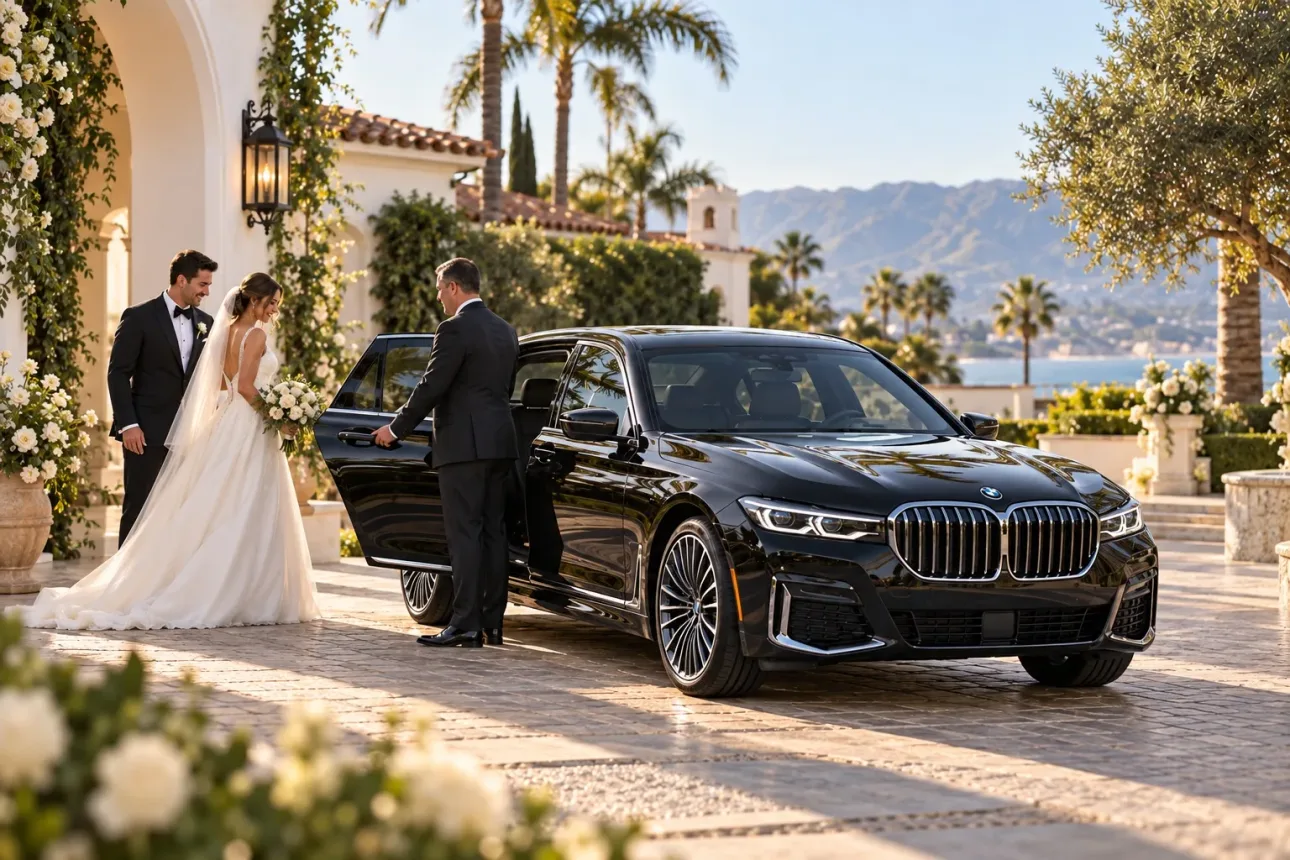
Wedding transportation is a moving timeline, not a single ride. The couple may begin at separate preparation locations, the wedding party may travel to photos, guests may depart from one or more hotels, and everyone may leave the venue at different times. A reliable plan connects those movements without asking the couple to solve logistics during the celebration.
Santa Barbara County adds its own considerations: coastal traffic, estate entrances, hotel loading areas, winery or ranch access, downtown streets, and venues where vehicles must arrive through a specific gate. These details are manageable when they are collected early and assigned to one transportation coordinator.
Use this guide to prepare for Santa Barbara wedding transportation for the couple, wedding party, family, and guests.
Make one person the transportation lead
The couple should not be the primary contact on the wedding day. Choose a planner, coordinator, trusted family member, or wedding-party member who understands the complete schedule and can make decisions. That person should have the transportation provider’s contact information and remain reachable during every movement.
The lead’s responsibilities are simple but important:
- Confirm that each passenger group is ready at the agreed time
- Communicate approved timeline changes
- Help guests find the designated hotel meeting point
- Coordinate with venue staff about the loading area
- Verify the final departure plan before the reception ends
Avoid giving several people authority to change the schedule. Separate messages from the photographer, venue, family, and couple can conflict. One lead can collect the information, decide with the planning team, and send a single clear update.
Map every group and movement
Start with a transportation worksheet rather than a vehicle list. Write down who needs to move, from where, to where, and by what deadline. This reveals whether one vehicle can complete sequential movements or whether different groups require simultaneous service.
Typical wedding movements include:
- Couple from preparation locations to a first look or ceremony
- Wedding party to portraits, ceremony, and reception
- Immediate family to pre-ceremony photos
- Guests from hotels to the venue
- Couple from the ceremony to portraits or reception
- Guests from the reception back to hotels
- Couple to the final overnight destination
Some weddings combine the ceremony and reception at one property. Others involve a church, photo location, and reception venue. Do not label a movement only as “to the wedding.” Record complete addresses and the purpose of each stop so the itinerary stays understandable to everyone reviewing it.
Build the transportation schedule backward
Begin with fixed deadlines: ceremony start, required family-photo time, venue access window, reception entrance, and final venue departure. Then work backward to determine when each group must leave.
The pickup time is not the same as the event time minus the drive shown on a map. Allow time for:
- Gathering passengers and loading personal items
- Walking from hotel rooms to the meeting point
- Boarding formal clothing carefully
- Venue gate or security procedures
- Unloading and walking to the ceremony area
- Normal traffic variation
- A protective buffer before the required arrival
If a photographer asks the wedding party to be ready for portraits at 2:00 p.m., that is an arrival deadline, not a hotel departure time. Work backward from 2:00 and include every transition. A schedule that looks slightly generous on paper often feels calm in practice.
Keep the couple’s ride separate from guest logistics
The couple’s transportation often has special timing, privacy, and photography needs. They may want a quiet ride before the ceremony, a short movement after the ceremony, or a planned exit at the end of the night. Treat those movements as their own itinerary.
Share the photo schedule, pickup entrances, passenger names, and anything that will travel in the vehicle. Formal clothing may require more room than an everyday trip. Bouquets, garment bags, change-of-clothes bags, and personal items should be counted when choosing a vehicle.
If the photographer wants photographs with the vehicle, agree on the timing before the event. A photo request after guests are waiting to board can delay another movement. Build a specific photo window into the schedule and tell the transportation team where it will occur.
Review vehicle options on the Seaside Transportation fleet page, then confirm the actual category and capacity with the reservation team. The final choice should fit the couple’s style while still meeting practical space and route needs.
Organize hotel transportation for guests
Guest transportation works best when instructions are easy to follow. Select a clearly named meeting point at each hotel, such as the main entrance or a designated group loading area. Ask the hotel whether vehicles can wait there and whether another entrance is required for larger passenger vehicles.
Give guests a concise schedule containing:
- Hotel name and exact meeting location
- Time guests must be present
- Departure time
- Venue name
- Return departure windows
- A contact person who is not the couple
“Meet in the lobby at 3:15 for a 3:30 departure” is clearer than “Transportation begins around 3:30.” The first version tells guests when to arrive and protects the departure time.
If guests are spread among several properties, decide whether each hotel needs its own pickup or whether one central location is practical. Every added stop affects the route and schedule. Provide an estimated passenger count by hotel, then update it as responses arrive.
Give the venue complete transportation details
Ask the venue coordinator where professional vehicles must enter, load, wait, and exit. A venue’s public address may lead to the wrong gate or a guest parking area. Rural properties may have narrow roads, controlled entrances, or limited turning space. Downtown venues may use a loading zone that is available only during a specific window.
Collect the following from the venue:
- Service entrance or approved gate
- Loading and unloading location
- Vehicle size restrictions, if any
- On-site contact name and mobile number
- Earliest allowed arrival
- Staging or waiting instructions
- Required final departure time
Send these notes to the transportation team before the wedding week. Verbal directions passed through several people are easily shortened or misunderstood. Written instructions and a map supplied by the venue are much more useful.
If your celebration requires several coordinated guest movements, the general event transportation service can also help you understand multi-vehicle planning.
Select vehicles by responsibility, not appearance alone
Different parts of the wedding may need different vehicles. A polished sedan or BMW may be right for the couple, while a luxury SUV can suit family members or a small wedding party. A passenger vehicle may be more practical for hotel guests. The plan should match each movement to the right capacity and access requirements.
For every vehicle, document:
- Passenger names or group label
- Maximum expected passenger count
- Personal items and formalwear
- Pickup and destination addresses
- Required arrival time
- Accessibility or child seating requests
- Person responsible for confirming departure
Do not assume young children can travel without advance preparation. If seating is requested, provide the information needed for the team to confirm what is available and appropriate. Families should receive that confirmation before the wedding day.
The exact vehicle is also subject to availability. Reserve early for popular dates, then keep passenger counts current so the selected category still matches the plan.
Coordinate with the photo timeline
Photography is one of the most common sources of hidden transportation time. The wedding party may travel from preparation to a first look, continue to a portrait location, and then reach the ceremony without appearing to have made several trips.
Ask the photographer for a location-by-location schedule. Confirm whether equipment will travel in a passenger vehicle or separately. Identify where the party should board after each photo segment, particularly at public coastal locations where parking and walking paths can separate the vehicle from the group.
Protect the ceremony arrival above optional photo stops. If the morning runs late, the transportation lead and photographer should know which photo segment can be shortened. Making that decision in advance is easier than negotiating it while everyone is waiting.
After the ceremony, guests and the couple may leave at the same time for different destinations. Make sure the couple’s vehicle is not blocked by a guest loading area and that the chauffeur knows the photographer’s plan for the departure.
Plan the final hour before the reception begins
Early in the planning process, couples focus on getting everyone to the wedding. The return is often left until later, even though it can involve more variables. Guests may leave after dinner, after speeches, or at the scheduled end. The venue may have a firm cutoff, and hotel destinations may be spread across the area.
Choose a return structure:
Scheduled departures work well when guests can choose among clearly published times. The invitation site or welcome note should state those times and meeting location.
One final departure is simpler for smaller celebrations where most guests will leave together. Confirm that the vehicle can accommodate the expected count.
Multiple planned movements may be needed when older relatives leave earlier, the main guest group leaves later, and the couple has a separate exit.
Avoid promising continuous transportation unless that exact service has been reviewed and confirmed. Publish only the return plan included in the reservation. The transportation lead should check with the venue coordinator before each departure and help gather the appropriate guests.
Prepare a communication sheet
Create a one-page transportation sheet for vendors and a shorter guest version. The vendor sheet can include complete addresses, contacts, group counts, vehicle assignments, and timing. The guest version should include only what guests need to act correctly.
The detailed sheet should list:
- Transportation lead and backup contact
- Planner and venue contact
- Hotel contacts
- Every vehicle assignment
- Passenger groups
- Pickup-ready and departure times
- Complete addresses and venue access notes
- Return schedule
- Special requests already confirmed
Send the final version several days before the wedding, after checking it against the photographer’s timeline and venue rules. Mark the version date so no one accidentally uses an earlier draft.
Plan for likely changes
A useful contingency plan does not need to predict every possibility. It should cover the changes most likely to affect movement: a late hair-and-makeup schedule, a delayed family member, traffic, a photo location change, or a revised venue access point.
Decide who can approve changes and which deadlines cannot move. For example, the transportation lead may shorten an optional photo stop but cannot delay the ceremony movement without consulting the planner. Share that hierarchy with key vendors.
If the passenger count changes materially or a new stop is added, contact the transportation team promptly. Vehicle capacity and schedule feasibility must be confirmed rather than assumed. Last-minute requests remain subject to time and availability.
For a simple ride involving one pickup and one destination, point-to-point transportation may be appropriate. A complex wedding timeline generally needs broader coordination.
Wedding transportation checklist
Before requesting a quote, collect:
- Wedding date and venue schedule
- All preparation, photo, ceremony, reception, and hotel addresses
- Required arrival time for each passenger group
- Passenger counts by movement
- Couple and wedding-party vehicle preferences
- Guest hotel pickup estimates
- Venue access and loading instructions
- Photo stops and planned vehicle photographs
- Child seating or accessibility requests
- Return departure times and destinations
- Transportation lead’s name and mobile number
Then review the schedule for overlaps. If two groups must move at the same time, one vehicle cannot cover both. If a vehicle must finish one trip before starting another, include unloading, repositioning, and boarding time.
Give the celebration a calm beginning and ending
Good wedding transportation is mostly invisible. The right guests appear at the right place, the couple has space to breathe, and the evening ends without uncertainty. That result comes from complete addresses, realistic buffers, clear vehicle assignments, and one empowered coordinator.
When the major locations and timeline are confirmed, request a wedding transportation quote. Share the full movement plan rather than only the ceremony time so Seaside Transportation can evaluate vehicles, timing, and availability for your Santa Barbara celebration.