Wine Tours
How to Plan a Private Santa Barbara Wine Tour
Plan a private Santa Barbara wine tour with practical advice for winery schedules, vehicle selection, group timing, lunch stops, and a comfortable return.
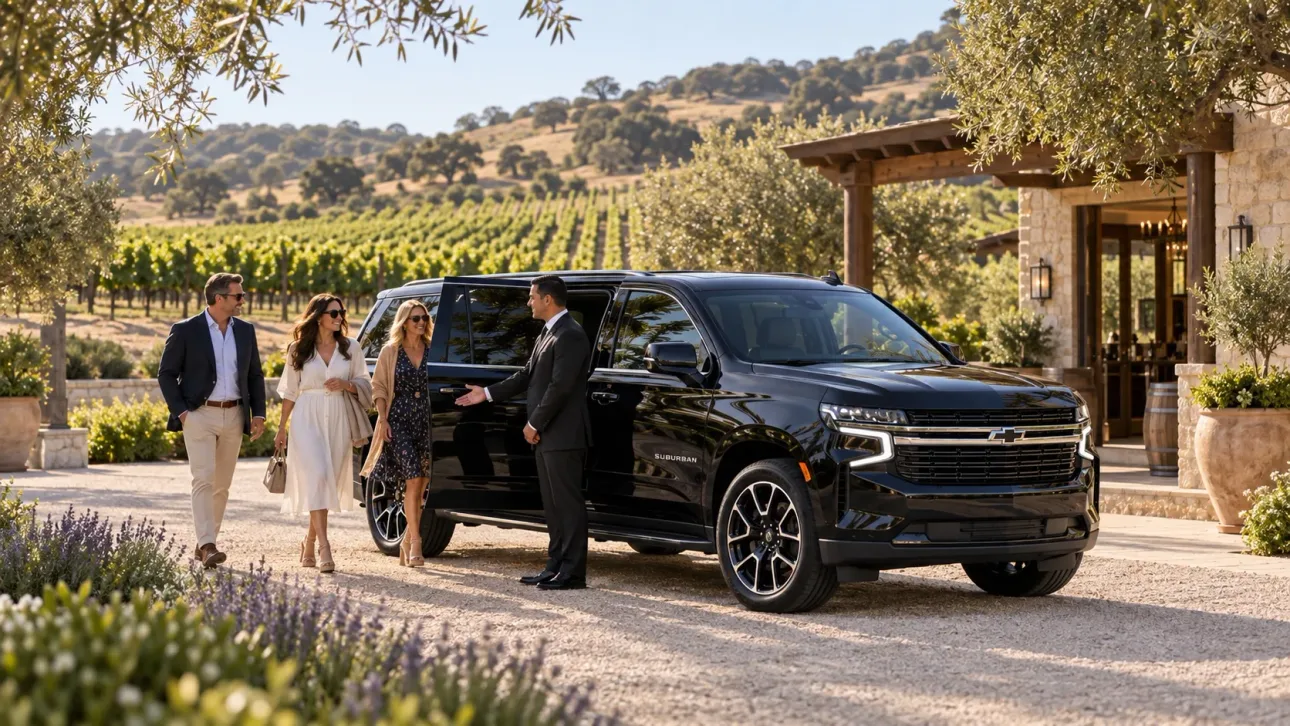
A private Santa Barbara wine tour is most enjoyable when the transportation plan supports the tasting schedule instead of competing with it. The region may look compact on a map, but a day can include hotel pickup in Santa Barbara, a drive over the mountains, several confirmed winery appointments, lunch, purchases to organize, and an evening return. Every piece affects the next one.
The best starting point is to treat the day as a coordinated itinerary. Decide which part of wine country you want to explore, reserve tastings before finalizing transportation, and allow enough time between appointments. Then choose a vehicle that fits the people, personal items, and wine you expect to bring home.
This guide explains how to build a realistic schedule for private Santa Barbara wine tour transportation in Santa Ynez, Los Olivos, Solvang, and Buellton.
Start with the experience you want
Before choosing individual wineries, agree on the shape of the day. A couple planning a quiet anniversary has different needs from friends celebrating a birthday or colleagues entertaining clients. The pace, meal plan, pickup location, and vehicle should reflect the occasion.
Ask your party a few practical questions:
- Does everyone prefer seated tastings, outdoor settings, or a mix?
- Are there specific wine styles or producers the group wants to visit?
- Will the day include a restaurant reservation or a casual lunch stop?
- Does anyone need extra boarding time or have a seating request?
- Is the final destination the original pickup point, a restaurant, or another hotel?
These answers create a useful outline. They also prevent a common planning mistake: selecting too many stops before deciding what kind of day the group actually wants.
Choose one wine-country area as your anchor
Santa Barbara County wine country includes several communities, and each can serve as the center of a route. Keeping most appointments in one area reduces time spent moving between stops and leaves more room to enjoy each tasting.
Santa Ynez works well for travelers who want a valley setting and a route that may include estates outside the town center. Guests staying on the coast can arrange a Santa Ynez private chauffeur and build the day around confirmed appointments.
Los Olivos offers many tasting options in and around a walkable village. It can be a convenient anchor when the group wants time for lunch or a short walk between scheduled experiences. Our Los Olivos transportation page explains local pickup and itinerary options.
Solvang can combine tasting appointments with dining and time in town. It is especially useful when some guests want a wine-focused day while others prefer shops or a relaxed meal.
Buellton can support appointments, dining, and connections to other valley communities. Travelers can review private transportation in Buellton when their hotel, restaurant, or first stop is there.
You do not have to stay within a single town. The important point is to avoid a route that repeatedly crosses the valley without a clear reason. Place appointments in a logical order and consider the direction of the final return.
Reserve tastings before locking the ride schedule
Winery reservations and tasting fees are handled directly by the guest. Transportation timing should then be organized around those confirmed appointments. Make a single itinerary containing the winery name, complete address, reservation time, expected duration, and reservation contact name.
Do not rely on a list of business names alone. Some producers have more than one guest location, and a tasting room may be in town while a vineyard property is elsewhere. A complete street address helps prevent the wrong location from entering the route.
When asking a winery how long to allow, mention the size of your party. A structured seated experience can take longer than a casual visit. If the winery gives an arrival rule, include it in your plan. Build transportation around the actual confirmation rather than a general estimate found online.
Once all appointments are confirmed, share the complete list when requesting a ride. That allows the transportation team to evaluate whether the sequence is practical and whether the requested service window covers the full day.
Build a schedule with breathing room
A wine-country day should not feel like a race. Guests need time to finish a tasting, make purchases, use the restroom, gather the party, and board the vehicle. The drive itself may also take longer than the shortest map estimate because of local roads, weekend activity, or an event.
A useful schedule includes four types of time:
- Experience time: the duration the winery recommends for the tasting.
- Transition time: the drive plus boarding and unloading.
- Meal time: a realistic window for lunch rather than a gap that only covers ordering.
- Buffer time: a small margin that protects the next reservation if an earlier stop runs long.
Avoid placing appointments back to back simply because two addresses appear close. Even a short drive requires the group to close a tab, collect purchases, meet at the vehicle, and settle in again. A thoughtful buffer keeps one delay from affecting the entire afternoon.
Most groups also benefit from naming a decision-maker. If the group is ready early or wants to shorten a stop, that person can communicate the choice clearly instead of asking the chauffeur to collect several conflicting opinions.
Decide between a direct transfer and hourly service
A single ride to or from wine country may work as point-to-point transportation. A day with several wineries, waiting time, lunch, and a return normally fits hourly chauffeur service more naturally. The vehicle remains connected to the itinerary while the party moves through its confirmed schedule.
When comparing options, count every part of the day. The service window may begin at a Santa Barbara hotel, continue through multiple valley stops, and end after the coastal return. A quote based only on tasting hours would leave out the travel that makes the day possible.
Share the exact pickup time you prefer, each planned address, the final drop-off, and any flexible stop. If you are still deciding between formats, explain the itinerary rather than choosing based only on the service name. The team can identify which structure matches the movements you described.
Match the vehicle to the group and the day
Passenger count is only the first part of vehicle selection. Think about comfort during the longer coastal-to-valley drive, mobility needs, personal items, and space for purchases. A vehicle that holds the guests may not be the right fit after several boxes or bags are added.
For a couple or a small party, an executive sedan or luxury SUV may provide the desired balance of privacy and room. Larger parties may need a passenger vehicle. Browse the Seaside Transportation fleet for available vehicle categories, then give the reservation team an accurate passenger count so they can confirm the appropriate option.
Do not plan around maximum capacity without discussing belongings. Tell the team if guests will bring luggage because they are changing hotels, if a folding mobility item is traveling, or if you expect substantial wine purchases. If child seating is required for a family itinerary, request it in advance and provide the child’s age and size information needed for confirmation.
Pick a clear meeting point
Hotel and resort pickups are often straightforward when the property has a designated arrival area. Residence pickups may require a gate code, access note, or an exact meeting location. Vacation properties can be especially confusing when the mailing address, driveway entrance, and map marker do not align.
Provide:
- The full pickup address and property name, if applicable
- A reachable mobile number for the day
- Gate, driveway, or reception instructions
- The name of the lead guest
- The number of passengers boarding at that location
- Any additional pickup that must occur before wine country
Multiple pickups consume part of the service window. When possible, ask guests staying nearby to meet at one hotel or residence. If separate pickups are essential, list them in the desired order and leave enough time before the first tasting.
Plan lunch as part of the route
Lunch should be an intentional part of the day, not an afterthought squeezed between reservations. Decide whether you want a restaurant booking, food available at a tasting location, or a stop where the group can choose individually. Confirm outside-food policies directly with any winery involved.
A restaurant meal needs time for seating, ordering, dining, and payment. If the group prefers a shorter break, place it near the route rather than driving across the valley for a specific venue. Dietary needs should be discussed with the food provider before the travel day.
Add the lunch address and reservation time to the transportation itinerary. If lunch is flexible, still set a likely area and approximate duration. That gives the day structure without making every minute rigid.
Keep the party comfortable and organized
Wine country weather can feel different from the coast, and outdoor experiences may change throughout the day. Guests should check the forecast, wear suitable footwear, and bring layers when appropriate. Water and personal necessities should be easy to identify rather than spread across the vehicle.
Use a consistent system for purchases. Label boxes or bags with the guest’s name before loading them, and decide who will verify everything at final drop-off. The chauffeur can provide transportation, but the party remains responsible for personal belongings and purchased wine.
Guests should also be ready at the agreed departure time from each stop. A courtesy message in the group chat five or ten minutes before departure can help. The designated organizer can check that everyone is present before the party moves on.
Share changes through one contact
Plans can change: a tasting may run late, a guest may leave early, or the group may decide to remove a flexible stop. One lead contact should communicate any request to the transportation team. This reduces confusion and creates a clear record of the updated plan.
Do not assume an unplanned winery can be added automatically. A new stop can affect timing, service duration, and the next confirmed appointment. Ask first so availability and route impact can be evaluated. The same applies to changing the final destination or adding a separate drop-off.
If the group divides during the day, clarify who is returning in the vehicle and whether another movement is being requested. A private itinerary works best when passenger counts and locations remain current.
Coordinate the return before the first tasting
The return trip deserves the same attention as the outbound journey. Confirm the final pickup location, intended departure time, and every drop-off. If the group will dine in Santa Barbara after wine country, decide whether transportation ends at the restaurant or continues afterward.
Travelers with evening flights, performances, or fixed dinner reservations should provide the required arrival time. The team can consider that deadline when reviewing the route, but a packed tasting schedule may need adjustment to protect it.
For guests arriving by air before a wine-country stay, the private airport transfer guide explains how to organize flight information, luggage, and meeting details separately from the tasting day.
Private wine tour planning checklist
Before requesting a quote, collect:
- Travel date and preferred pickup time
- Exact pickup and final drop-off addresses
- Confirmed tasting names, addresses, and reservation times
- Expected duration at every stop
- Lunch address and reservation, if applicable
- Accurate passenger count
- Expected purchases, luggage, or mobility items
- Child seating requests, if applicable
- Lead guest name and mobile number
- Any deadline after the tour
Review the itinerary with the group once, then submit a single version. If an appointment changes, update the transportation team rather than relying on an old shared schedule.
Make the route part of the experience
The strongest wine tour plans are not necessarily the ones with the most stops. They are the ones that give guests enough time to enjoy each confirmed experience while keeping the day clear and comfortable. A sensible geographic order, an appropriate vehicle, one lead contact, and a realistic return plan make a noticeable difference.
When your tasting reservations are confirmed, request a private wine tour quote with the full itinerary. Seaside Transportation can then review the route, timing, passenger count, and vehicle needs for your Santa Barbara County wine-country day.